Create Mock Observations of the High Redshift Universe
Comparing with and Predicting the Physical Properties of Observed JWST Galaxies
Welcome to the Universe
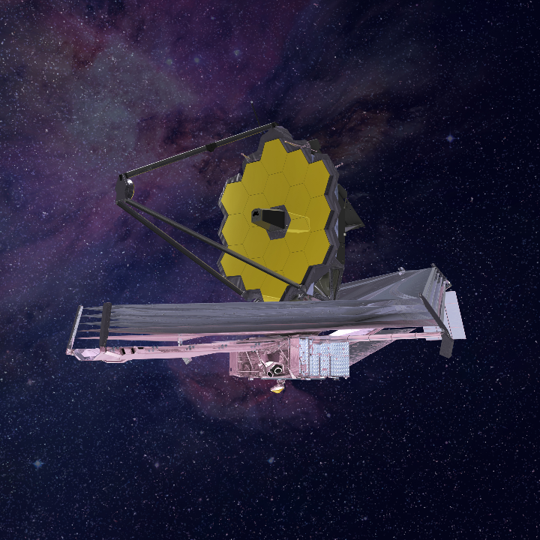
The James Webb Space Telescope (JWST), launched in December 2021, has delivered a tidal wave of observations of the early universe. These observations are a critical step toward understanding the formation and evolution of early stars and galaxies.
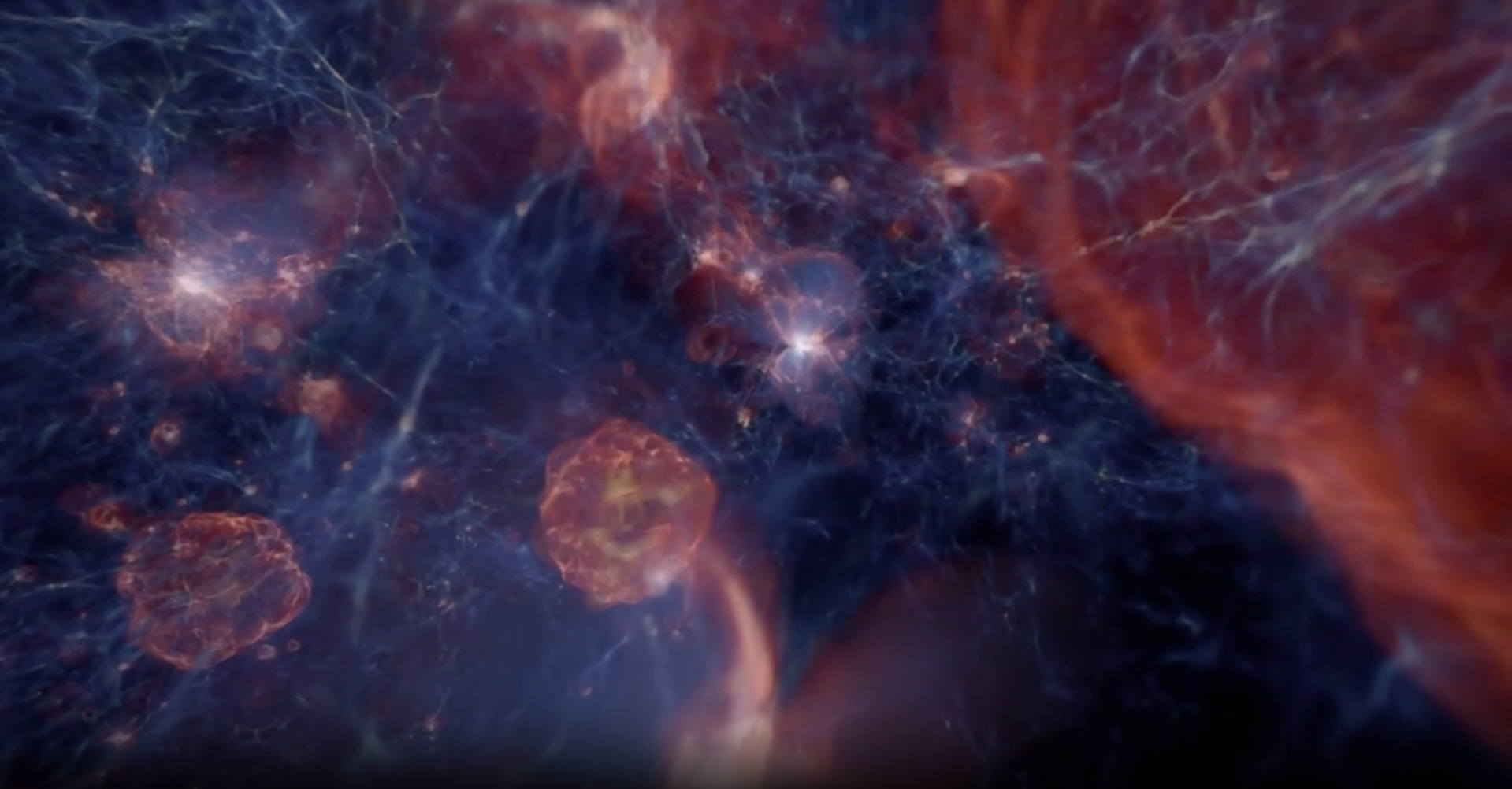
The Renaissance Simulations trace the evolution of early galaxies to redshifts of z = 15, 12.5, and 8, reaching epochs observable by JWST. By directly comparing simulation results with Webb’s data, researchers can test how well their theoretical models agree with observations of the early universe. Together, JWST and the Renaissance Simulations provide an unprecedented opportunity to expand our understanding of early star formation.
All Renaissance Simulation datasets used in this work are available for download directly through this website. Making the data openly accessible allows researchers, students, and the broader community to explore the formation and evolution of the first galaxies alongside JWST’s observations.
Image credit: Dr. John Wise
Renaissance Simulations
The Renaissance Simulations are high resolution, low mass (> 108 M⊙), high-redshift (z > 10) zoom in simulations that model the first galaxies. They were run using the adaptive mesh refinement code ENZO and consist of three main regions: the Normal, Void, and Rarepeak. These regions represent areas of normal, low, and high mass densities, respectively.
JWST has allowed us to study earlier galaxies than ever before, with infrared coverage spanning wavelengths from 0.6 to 28.5 μm. This data has elevated our ability to study the Epoch of Reionization (z ≥ 6) and Cosmic High Noon (z = 2–6). The Renaissance Simulations are being compared against the highest redshift galaxies found by various JWST surveys.
Artist’s conception of NASA’s James Webb Space Telescope in orbit. Credits: Northrop Grumman